
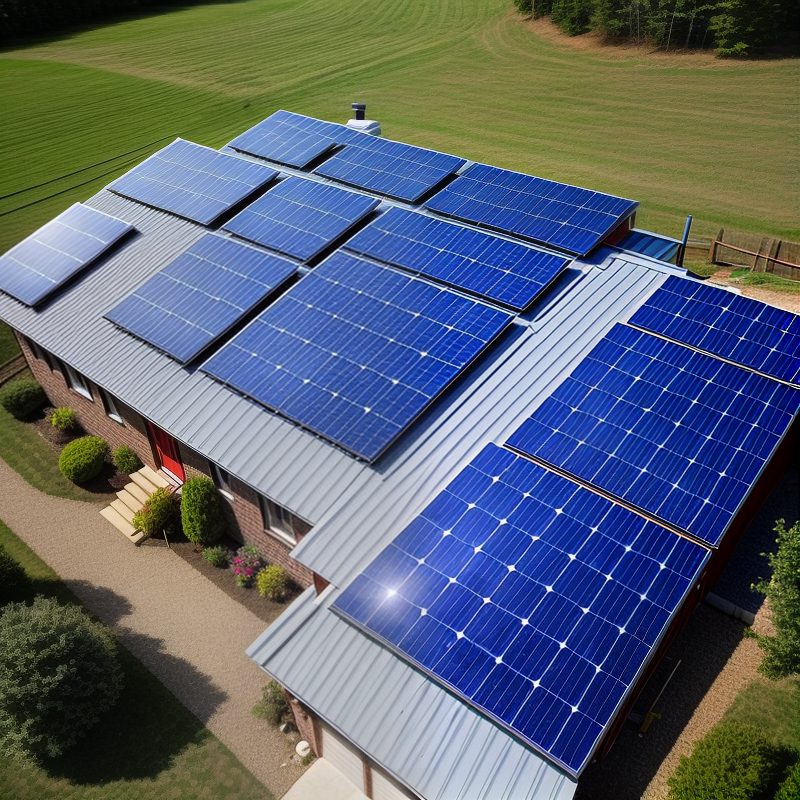
Discover how Valley Solar can elevate your energy independence through innovative net metering systems tailored to meet your needs.
net metering systems
Net Metering is a greener option for Hydro customers to lower or even zero their electricity bill. It is a system which uses renewable energy sources such as solar panels and/or wind turbines at private residences or businesses to generate and consume their own power.
A special hydro meter connects this system to the grid and monitors the electricity produced. Any excess power generated can be credited forward for a consecutive 12 month period to offset the cost of their electricity bill.
Systems up to 10KW are available to Hydro clientele and are designed in accordance to their current and expanding needs. The net metering program offers the ability to freeze rising electricity costs and eliminate time of use consumption for many years to come.
Contact Us for a free site evaluation and quotation.
benefits
How it works
- Install solar panels on your roof
- You produce electricity for your home
- When you produce more then you use, the utility will credit your account
- Credits can be carried forward for 12 months
- Build credits in the summer then use them in the winter
- Learn more about eligible renewable energy system Incentive Programs
included in quotation
- Structural engineering assessment
- Ordering and installation of all materials including modules, inverters & racking
- Installation of all AC electrical components
- Scheduling of ESA Inspection, meter installation and grid connection
- Online monitoring connection and portal overview
| Inverter Size (AC) | 3.8 kW | 5 kW | 7.6 kW | 10 kW |
|---|---|---|---|---|
| Solar Panels (DC) |
4.95 kW |
6.930 kW |
8.910 kW |
13.860 kW |
| Roof space required | 240 ft 2 | 335 ft 2 | 480 ft 2 | 646 ft 2 |
| Annual Production | 5,948 kWh | 7,832 kWh | 11,444 kWh | 17,801 kWh |
| Annual Savings | $1,190 | $1,566 | $2,289 | $3,560 |
|
30 Year Fixed Cost of Energy |
$0.118/kWh | $0.102/kWh | $0.086/kWh | $0.074/kWh |
‘From the first inquiry about our needs for a fully off grid setup to completion, we were able to have our outstanding system installed in less than 3 weeks.
Every member of the staff was very easy to talk to and completely professional.It has been a complete pleasure meeting and working with all of the team members .
The simplicity of the system setup makes it completely hassle free for every member of the family to use.’
FAQ’s
If your roof is at the end of its lifespan, we recommend re-shingling before the system is installed on the roof. Please note we can take the system down and put it back up again which we can provide price estimation when the time comes for the roof to be re-shingled.
Yes, but it requires a battery storage system and often a backup generator. Off-grid systems are more common in remote areas without access to the main power grid.
A solar power system captures sunlight using solar panels and converts it into electricity using an inverter. The electricity can power your home or business, and excess energy can be sent to the grid.
Solar panels typically last 25–30 years, and many come with a warranty to match.
Factories can reduce energy consumption through measures such as upgrading equipment, optimizing processes, implementing energy-efficient technologies, and using renewable energy sources.
Costs vary based on system size, location, and installation. On average, a residential system can range from $10,000 to $25,000 before incentives.